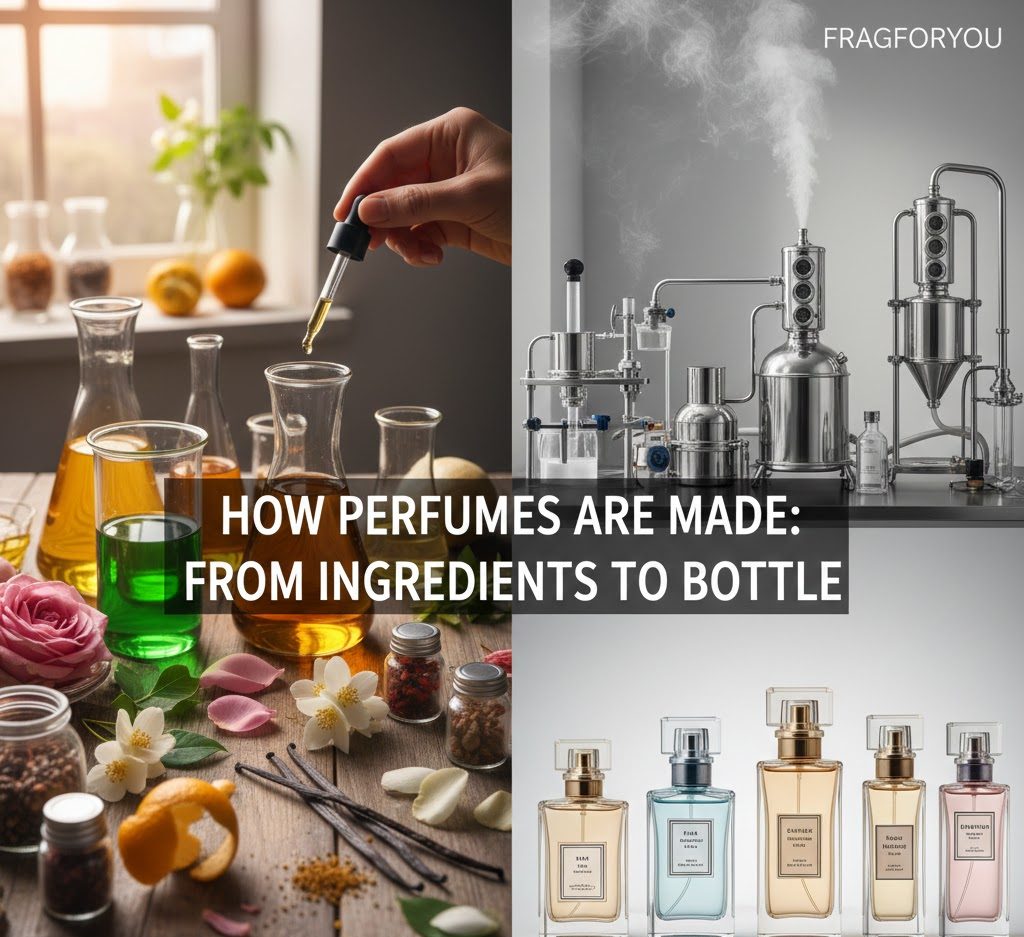
Perfumes may feel magical—but behind every bottle is a carefully crafted process that blends art, science, and creativity. From extracting natural ingredients to aging the final fragrance, every step plays a role in how a perfume smells and performs.
In this guide, we break down how perfumes are made—from ingredients to bottle in a simple, beginner-friendly way.
Step 1: Sourcing the Ingredients
Every perfume begins with raw materials, which can be natural or synthetic.
Natural Ingredients
- Flowers (rose, jasmine, lavender)
- Woods (sandalwood, cedar)
- Resins (amber, frankincense)
- Fruits and spices
Synthetic Ingredients
- Lab-created aroma molecules
- Used to enhance longevity and consistency
- Help recreate rare or expensive scents
Most modern perfumes use a blend of both for balance and performance.
Step 2: Extracting Fragrance Oils
To use natural ingredients, perfumers must extract their scent.
Common Extraction Methods:
Steam Distillation
- Uses steam to extract oils from plants
- Common for lavender, mint
Cold Pressing
- Used for citrus fruits like lemon and orange
Solvent Extraction
- Used for delicate flowers like jasmine
- Produces a concentrated material called “absolute”
Enfleurage (Traditional Method)
- Rare today
- Uses fat to absorb fragrance from flowers
Step 3: Creating the Perfume Formula
This is where art meets science.
A perfumer (also called a “nose”) blends different ingredients to create a fragrance structure:
- Top notes: first impression
- Middle notes: main character
- Base notes: depth and longevity
A single perfume can contain 30–100+ ingredients.
This stage can take months or even years to perfect.
Step 4: Blending with Alcohol
Once the formula is ready:
- Fragrance oils are mixed with alcohol (ethanol)
- Water may also be added
- The concentration determines type:
- Parfum
- Eau de Parfum (EDP)
- Eau de Toilette (EDT)
This step transforms raw fragrance into a wearable perfume.
Step 5: Aging (Maceration)
After blending, the perfume is left to age or macerate.
Why aging matters:
- Ingredients blend smoothly
- Scent becomes more balanced
- Harsh edges soften
This process can take:
- A few weeks (mass perfumes)
- Several months (luxury perfumes)
Step 6: Filtration & Stabilization
Before bottling:
- The perfume is cooled and filtered
- Impurities and particles are removed
- Ensures clarity and stability
This step gives perfume its clean, polished finish.
Step 7: Bottling & Packaging
Finally, the perfume is:
- Filled into bottles
- Sealed to prevent evaporation
- Packaged with branding and design
Luxury brands invest heavily in:
- Bottle design
- Packaging aesthetics
- Presentation
The bottle is part of the overall experience.
Check out some fragrances on : https://amzn.to/3OzgRf2
How Long Does It Take to Make a Perfume?
- Simple perfumes → a few weeks
- Designer perfumes → months
- Niche/luxury perfumes → years
Creating a great perfume requires testing, refining, and patience.
Natural vs Synthetic in the Process
Both play important roles:
- Natural: depth, richness, authenticity
- Synthetic: longevity, consistency, innovation
Modern perfumery depends on a combination of both.
Common Myths About Perfume Making
- Perfumes are just “fragrance + alcohol”
- Natural perfumes are always better
- Expensive perfumes are made instantly
In reality, perfume creation is a complex, multi-step process.
Final Verdict
Perfume making is a fascinating blend of nature, chemistry, and creativity. From sourcing raw ingredients to crafting the final bottle, every step contributes to the scent you wear.
Understanding how perfumes are made helps you:
- Appreciate fragrances more deeply
- Choose perfumes more wisely
- Recognize quality and craftsmanship
The next time you spray your favorite perfume, remember—
you’re wearing months (or years) of artistry in a bottle.