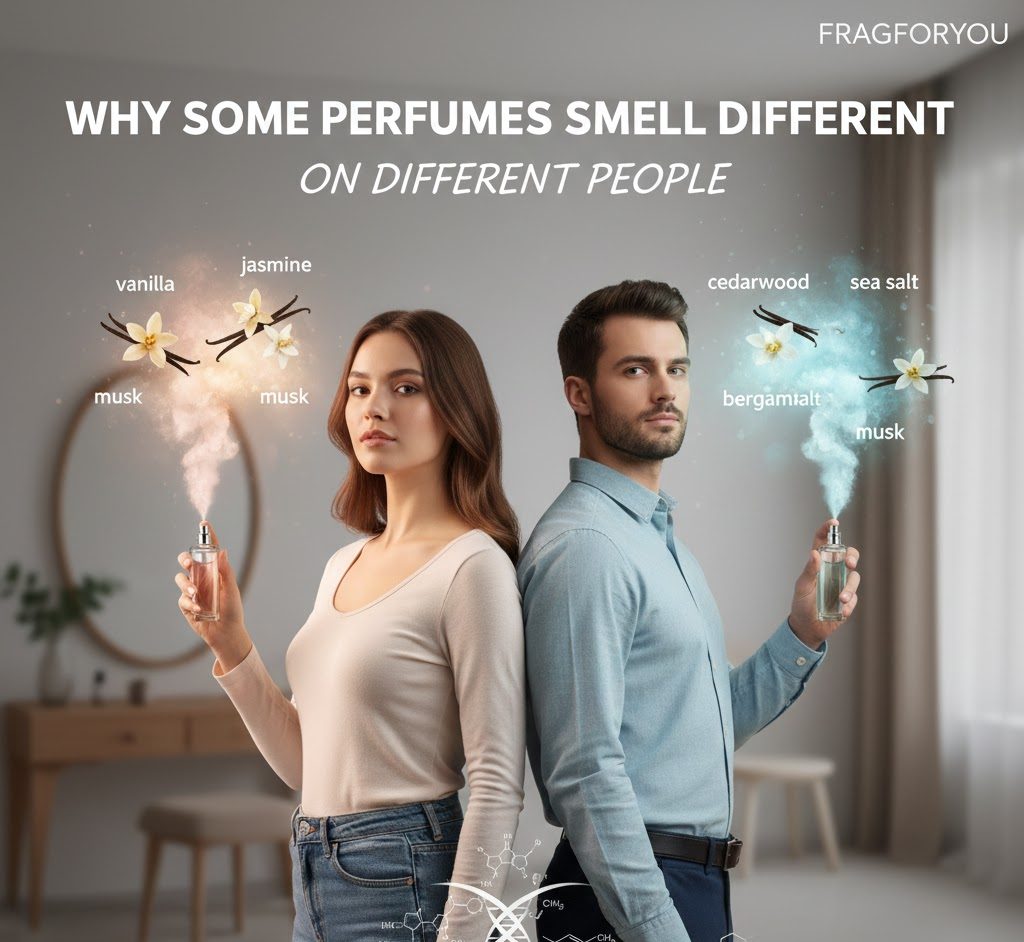
Have you ever tried a perfume that smelled amazing on a friend—but completely different on you? This is one of the most common and confusing experiences in the fragrance world. The truth is, perfumes don’t smell the same on everyone, and there’s solid science behind it.
In this article, we explain why perfumes react differently on different people, what factors influence this change, and how you can find a perfume that works best with your skin.
The Simple Answer: Skin Chemistry
The main reason perfumes smell different on different people is skin chemistry. Your skin isn’t a neutral surface—it has its own:
- Natural oils
- pH level
- Bacteria
- Moisture content
When perfume mixes with these elements, the scent can shift slightly—or sometimes dramatically.
1. Skin Type (Oily vs Dry Skin)
Your skin type plays a major role in how a perfume develops.
Oily Skin
- Holds fragrance molecules better
- Perfumes last longer
- Scents often smell richer and warmer
Dry Skin
- Perfume evaporates faster
- Longevity is usually shorter
- Scents may smell lighter or sharper
👉 Tip: If you have dry skin, apply an unscented moisturizer before spraying perfume.
2. Skin pH Level
Skin pH (acidity or alkalinity) affects how perfume notes break down.
- More acidic skin: Can make perfumes smell sharper or tangier
- More alkaline skin: Can soften or sweeten certain notes
This is why citrus notes may smell fresh on one person but sour on another, while sweet notes may bloom beautifully on someone else.
3. Body Heat & Temperature
People with higher body heat tend to experience stronger perfume diffusion.
- Warmer skin amplifies projection
- Cooler skin releases scent more slowly
That’s why the same perfume can feel:
- Bold and intense on one person
- Soft and subtle on another
This also explains why perfumes smell stronger in summer than in winter.
4. Natural Body Odor & Bacteria
Your skin has natural bacteria that interact with perfume oils.
- This interaction can change how notes evolve
- Musks, ambers, and animalic notes are especially affected
This doesn’t mean bad hygiene—it’s completely natural and unique to each person.
5. Hormones & Lifestyle
Hormonal changes can affect how perfumes smell and perform.
Factors include:
- Stress levels
- Menstrual cycle
- Pregnancy
- Diet (spicy foods, garlic, alcohol)
For example, a perfume you loved years ago might suddenly smell different today—your body chemistry has changed.
6. Climate & Environment
Where you live matters too.
- Hot, humid climates: Make perfumes project more but fade faster
- Cold climates: Slow evaporation, making perfumes last longer
This is why a perfume might smell amazing on vacation but different at home.
7. Application Areas
Where you apply perfume also affects how it smells.
Pulse points like wrists, neck, and behind ears:
- Generate heat
- Help perfume evolve faster
Applying perfume on clothes removes skin interaction—making it smell closer to how it does in the bottle, but with less depth.
Why Perfume Smells Great on Paper but Different on Skin
Perfume test strips (blotters) don’t have:
- Skin oils
- Body heat
- pH
So they show the pure scent, not how it will develop on you. That’s why testing on skin is always more accurate.
How to Find a Perfume That Smells Good on You
Follow these simple tips:
- Always test perfume on your skin
- Wait at least 30–60 minutes before judging
- Try perfumes in different weather conditions
- Avoid rubbing your wrists after spraying
- Choose notes that suit your skin type
For example:
- Dry skin → woody, amber, musky notes
- Oily skin → fresh, citrus, or floral notes
Is This a Bad Thing? Not at All.
The fact that perfumes smell different on everyone is what makes fragrance personal and unique. Your skin turns a perfume into your version of that scent—something no one else can replicate exactly.
Final Verdict
Perfumes smell different on different people because of skin chemistry, oils, pH, body heat, hormones, and environment. This isn’t a flaw—it’s what makes fragrance wearing a personal experience.
The key takeaway?
Always choose perfumes based on how they smell on your skin, not someone else’s.
To know about more such Fragrances, check out our website: