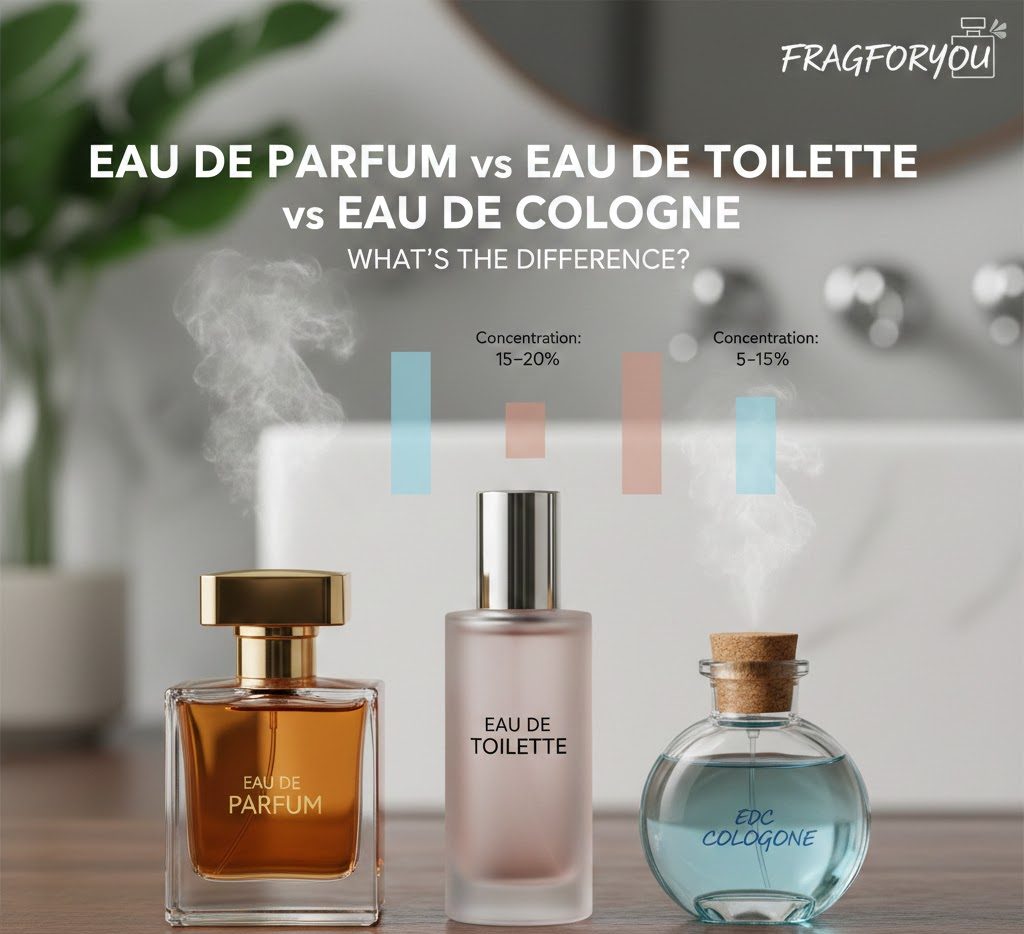
When shopping for perfumes, you’ve probably noticed terms like Eau de Parfum (EDP), Eau de Toilette (EDT), and Eau de Cologne (EDC) on bottles. While they may smell similar at first, these fragrance types differ significantly in strength, longevity, and usage.
In this guide, we clearly explain the difference between Eau de Parfum, Eau de Toilette, and Eau de Cologne—so you can choose the right one for your lifestyle and budget.
What Do These Terms Mean?
The difference between EDP, EDT, and EDC mainly comes down to fragrance oil concentration. This concentration determines how strong a perfume smells and how long it lasts on your skin.
Eau de Parfum (EDP)
Fragrance Oil Concentration: 15–20%
Average Longevity: 6–10 hours
Projection: Moderate to strong
What is Eau de Parfum?
Eau de Parfum is one of the most popular perfume types today. It has a higher concentration of fragrance oils, making it richer, longer-lasting, and more intense than EDT or EDC.
Best for:
- All-day wear
- Evening outings and dates
- Cooler weather
- People who prefer noticeable scents
Pros:
- Longer lasting
- Requires fewer sprays
- Better performance on skin
Cons:
- Slightly more expensive
- Can feel heavy in very hot weather
Eau de Toilette (EDT)
Fragrance Oil Concentration: 5–15%
Average Longevity: 4–6 hours
Projection: Light to moderate
What is Eau de Toilette?
Eau de Toilette is lighter, fresher, and more subtle than EDP. It’s designed for daily and daytime use, especially in professional or casual environments.
Best for:
- Office and college
- Daytime wear
- Summer and warm climates
- People who prefer soft fragrances
Pros:
- Fresh and easy to wear
- More affordable than EDP
- Less overpowering
Cons:
- Shorter longevity
- May require reapplication
Eau de Cologne (EDC)
Fragrance Oil Concentration: 2–5%
Average Longevity: 2–4 hours
Projection: Very light
What is Eau de Cologne?
Eau de Cologne is the lightest and freshest form of fragrance. Traditionally citrus-based, EDC is meant for quick refreshment rather than long-lasting scent.
Best for:
- Hot summer days
- After-shower freshness
- Quick errands
- People sensitive to strong fragrances
Pros:
- Very light and refreshing
- Budget-friendly
- Ideal for frequent reapplication
Cons:
- Very short-lasting
- Minimal scent depth
Quick Comparison Table
| Feature | Eau de Parfum (EDP) | Eau de Toilette (EDT) | Eau de Cologne (EDC) |
|---|---|---|---|
| Oil Concentration | 15–20% | 5–15% | 2–5% |
| Longevity | 6–10 hrs | 4–6 hrs | 2–4 hrs |
| Strength | Strong | Moderate | Light |
| Best Time | Evening / All day | Daytime | Quick refresh |
| Price | Higher | Moderate | Lower |
Which One Should You Choose?
Choose Eau de Parfum if:
- You want strong performance and longevity
- You prefer bold or warm fragrances
- You don’t want to reapply often
Choose Eau de Toilette if:
- You need a daily office-safe scent
- You live in a hot climate
- You prefer lighter fragrances
Choose Eau de Cologne if:
- You want a refreshing splash
- You dislike strong scents
- You want an affordable option
Does Higher Concentration Always Mean Better?
Not necessarily. While EDP lasts longer, EDT and EDC are often more comfortable for everyday use. The “best” option depends on:
- Your environment
- Weather conditions
- Personal scent preference
Many fragrance lovers own multiple concentrations for different occasions.
Final Verdict
The difference between Eau de Parfum, Eau de Toilette, and Eau de Cologne lies in concentration, longevity, and intensity—not quality. Each serves a different purpose, and understanding these differences helps you choose smarter and spend better.
If you want long-lasting impact, go for EDP.
If you want daily freshness, EDT is ideal.
If you want light refreshment, EDC does the job.
To know about more such Fragrances, check out our website: