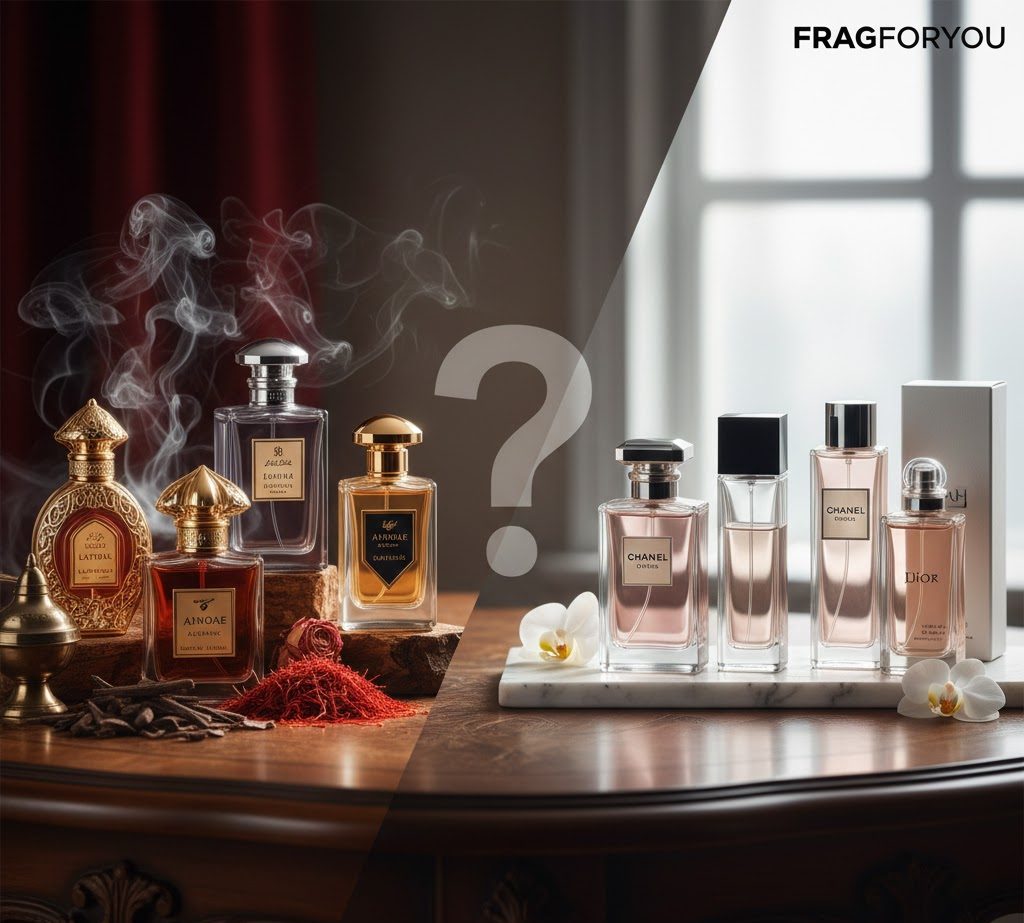
Fragrance lovers often ask an interesting question: Are Middle Eastern perfumes better than designer perfumes? The short answer is: it depends on what you’re looking for. Both categories offer unique strengths and appeal — and understanding how they differ can help you choose the right scent for your style and occasions in 2025.
What Defines a Middle Eastern Perfume?
Middle Eastern perfumes — especially those from Arabic perfumery houses — often draw from centuries-old traditions. They blend strong, rich ingredients like oud, amber, saffron, and spices into highly concentrated formulas, frequently oil-based, which makes them extremely long-lasting and intense.
Key characteristics of Middle Eastern scents:
- Often oil-based (higher concentration than alcohol blends)
- Bold, deep, and rich aroma profiles
- Strong performance and long longevity
- Traditional Arabian notes like oud, amber, musk, and incense
These fragrances are known for their powerful presence and ability to linger for hours — sometimes even days with perfume oils.
What Makes Designer Perfumes Stand Out?
Designer perfumes are typically created by major fashion houses (like Chanel, Dior, Gucci, Versace, etc.) and are usually alcohol-based blends. They are crafted to be versatile, modern, and broadly appealing to a wide audience.
Key traits of designer fragrances:
- Balanced and wearable across many occasions
- Often lighter, fresher, and easier to wear daily
- Backed by strong branding and global appeal
- Typically alcohol-based with a wide range of scent categories
Designer scents are crafted to be confident yet safe, making them a go-to choice for office wear, everyday use, or social environments where subtler fragrances are preferred.
Side-by-Side Comparison: Middle Eastern vs Designer
1. Longevity & Performance
Middle Eastern Perfumes:
- Typically stronger and longer-lasting due to higher oil concentration.
- Great for evenings, special occasions, and cold weather if you want a bold trail.
Designer Perfumes:
- Moderate longevity and projection.
- Designed for versatile daily wear without overwhelming the senses.
2. Scent Complexity
Middle Eastern Perfumes:
- Often heavier, rich, and layered with deep notes like oud, amber, musk, and spices.
- Less mainstream, more niche in character.
Designer Perfumes:
- Wider variety — from fresh citrus to subtle florals to refined woods.
- Easier for beginners and those who prefer lighter scents.
3. Wearability & Versatility
Middle Eastern Perfumes:
- Best for evenings, colder seasons, and those who like intense presence.
- Sometimes too overpowering for formal or office environments.
Designer Perfumes:
- Works well in most scenarios — office, social, daily routines.
- Often crowd-pleasing with universal appeal.
4. Value & Accessibility
Middle Eastern Perfumes:
- Can be very affordable even with strong performance.
- Also available in luxury niche segments commanding higher prices.
Designer Perfumes:
- Often priced higher due to brand prestige and global distribution.
- Image and brand play a big role in perceived value.
Expert Tips for 2025 Fragrance Lovers
Try Layering
A growing trend is layering designer with Middle Eastern oils or perfumes to create unique signatures — e.g., a designer scent with a dab of oud oil to add depth.
Explore Seasonal Usage
- Summer & daytime: lighter designer or floral-oriental blends
- Winter & evening: rich Middle Eastern oud, amber, or musk-driven fragrances
Test Before You Buy
Because intensity and perception vary by skin chemistry, always test a fragrance on skin before purchasing if possible — especially with bold Middle Eastern blends.
Final Verdict: Are Middle Eastern Perfumes Better?
No — but they are different.
Middle Eastern perfumes excel at intensity, longevity, and depth thanks to their oil-rich formulations and strong traditional ingredients.
Designer perfumes excel at versatility, modern appeal, and broad-spectrum wearability.
Ultimately, the better choice depends on your personal taste, lifestyle, and the impression you want to make with your scent.
👉 For many fragrance lovers in 2025, the ideal wardrobe includes both — a couple of daily staples from designer houses and a few bold Middle Eastern gems for evenings and special moments.
To know about more such fragrances, check out our website: