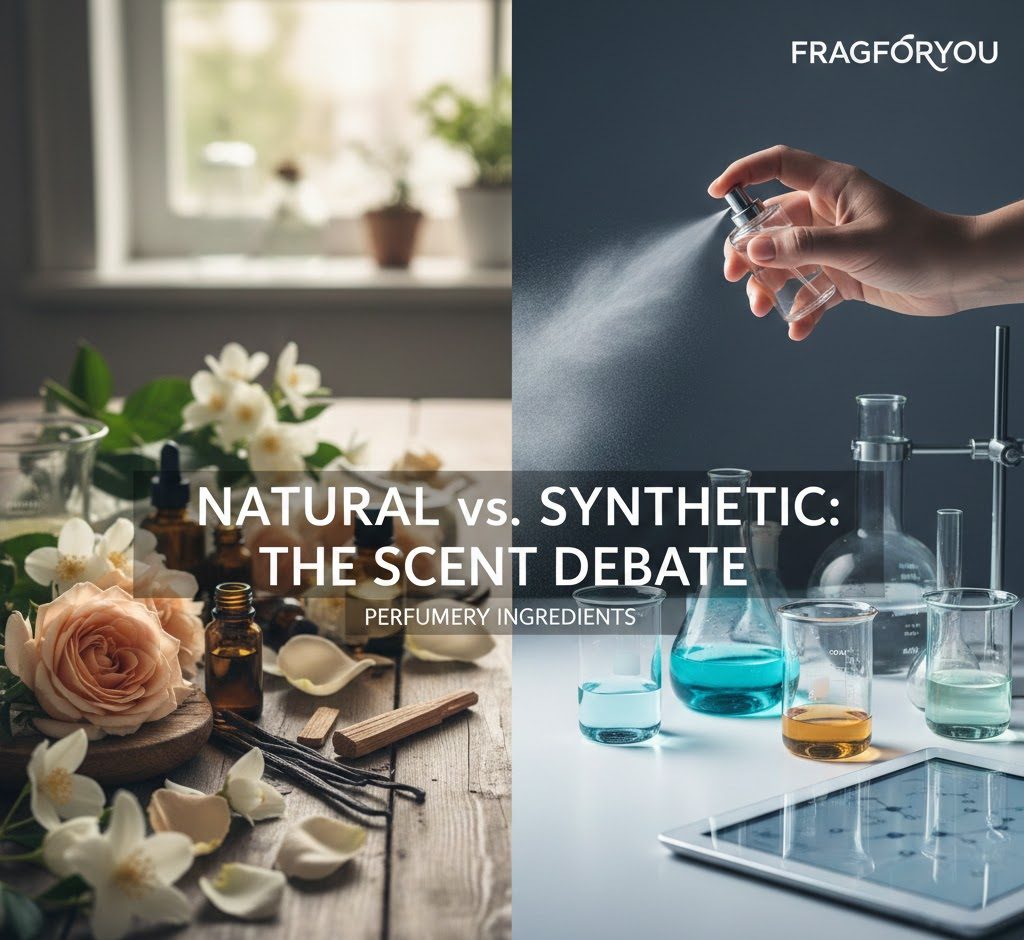
When choosing a perfume, you may often see terms like natural, synthetic, clean, or chemical-free. This can make perfume buying confusing—especially for beginners. The truth is, almost every modern perfume uses both natural and synthetic ingredients, and each plays an important role.
In this article, we explain natural vs synthetic ingredients in perfumery, their pros and cons, and which option is actually better for you.
What Are Natural Ingredients in Perfumery?
Natural perfume ingredients are derived from plants, flowers, woods, resins, spices, and animal-derived sources (now mostly replaced by ethical alternatives).
Common Natural Ingredients
- Rose, jasmine, lavender
- Sandalwood, cedarwood
- Citrus peels (lemon, bergamot, orange)
- Vanilla, patchouli
- Resins like frankincense and myrrh
These ingredients are extracted using methods like steam distillation, cold pressing, or solvent extraction.
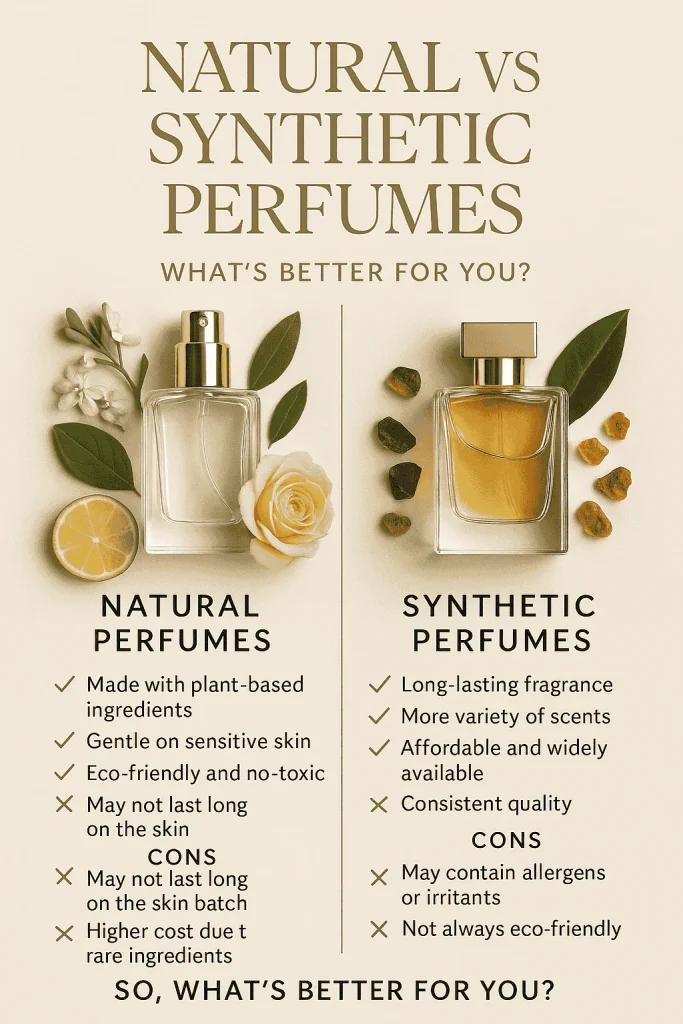
Advantages of Natural Ingredients
- Rich, complex, and organic scent profile
- Feel luxurious and traditional
- Appeal to people seeking “natural” or artisanal perfumes
Disadvantages of Natural Ingredients
- Expensive to source
- Limited availability due to climate and harvest
- Can vary in smell batch to batch
- Often don’t last as long
- Higher risk of allergies for sensitive skin
What Are Synthetic Ingredients in Perfumery?
Synthetic ingredients are lab-created aroma molecules designed to replicate natural smells or create scents that don’t exist in nature.
Common Synthetic Ingredients
- Musks
- Ambroxan
- Aldehydes
- Iso E Super
- Synthetic vanilla and sandalwood accords
Many iconic perfume notes cannot exist without synthetics.
Advantages of Synthetic Ingredients
- Better longevity and projection
- Consistent scent quality
- More affordable
- Safer and more controlled for skin
- Eco-friendly (less strain on natural resources)
Disadvantages of Synthetic Ingredients
- Some people perceive them as “less natural”
- Overuse can feel harsh in low-quality perfumes
Why Most Perfumes Use Both
Modern perfumery relies on a blend of natural and synthetic ingredients to balance beauty, performance, and safety.
For example:
- Natural rose oil provides depth
- Synthetic molecules improve longevity
- Synthetics replace endangered materials like real musk or sandalwood
Without synthetics, many famous perfumes simply wouldn’t exist.
Performance Comparison: Natural vs Synthetic
| Factor | Natural Ingredients | Synthetic Ingredients |
|---|---|---|
| Longevity | Low to moderate | Moderate to high |
| Projection | Soft | Stronger |
| Consistency | Varies by harvest | Highly consistent |
| Price | Expensive | More affordable |
| Sustainability | Limited | More eco-friendly |
Are Synthetic Ingredients Harmful?
This is one of the biggest myths in perfumery.
✔ Synthetic does not mean unsafe
✔ Most perfume ingredients are tested and regulated
✔ Natural ingredients can also cause allergies
In fact, many synthetic molecules are safer and more stable than natural extracts.
Natural Perfumes: Are They Better?
Natural perfumes can be wonderful if you:
- Prefer soft, skin-close scents
- Value artisanal craftsmanship
- Don’t mind reapplying frequently
However, they are not always suitable for:
- Long workdays
- Hot climates
- People wanting strong performance
Synthetic Perfumes: Are They Better?
Synthetic ingredients shine when you want:
- Long-lasting fragrances
- Consistent scent experience
- Strong projection
- Affordable options
Most popular designer and Middle Eastern perfumes rely heavily on synthetics for this reason.
How to Choose What’s Right for You
Choose Natural-leaning perfumes if:
- You have a minimalist lifestyle
- You enjoy subtle, evolving scents
- You prefer botanical aromas
Choose Synthetic-heavy perfumes if:
- You want performance and longevity
- You live in hot or humid climates
- You need an all-day fragrance
Best option?
A well-blended perfume using both
Common Myths About Natural vs Synthetic Perfumes
- Natural perfumes last longer – Not always
- Synthetic perfumes are toxic – False
- Natural perfumes smell better – Subjective
- Synthetic perfumes are cheap – Many luxury perfumes rely on them
Final Verdict
The debate between natural vs synthetic ingredients in perfumery isn’t about which is better—it’s about balance.
Natural ingredients bring soul and complexity.
Synthetic ingredients bring stability, longevity, and innovation.
The best perfumes in the world use both, working together to create scents that are beautiful, safe, long-lasting, and memorable.
Instead of choosing sides, focus on how a perfume smells on you, how long it lasts, and how it makes you feel.
To know about more such information, check out our website: